Home Ground: The Quiet Power of a Doorstep Portrait Session
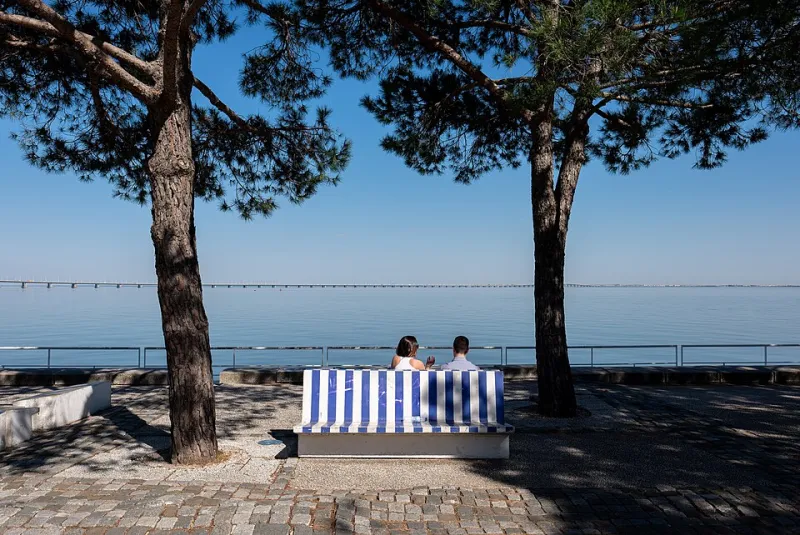
Photo: Jules Verne Times Two, CC BY-SA 4.0, via Wikimedia Commons
Some of the best portraits I've made in 2026 didn't happen in a bluebell wood or against a sweeping coastal view. They happened at number 14, on a Tuesday, with a wheelie bin moved politely to one side and a dog barking behind the glass.
That's the thing about doorsteps. They are unglamorous, familiar and completely honest. And for couples and families who feel slightly awkward in front of a camera, that honesty is exactly what settles them down.
Why the most ordinary doorway works
A grand location asks something of you. It says perform, look impressed, stand beautifully beside this view. Your own front door asks nothing. You already know how the key turns, where the step dips, which neighbour will pop out for a chat. That familiarity does more for a portrait than any backdrop.
There's also the story. A doorstep is a threshold — the place where you come home, where deliveries pile up, where children are lifted over puddles, where guests are greeted. Photographing a family on their own step isn't a compromise. It's a record of where their ordinary life happens.
In Britain we have a particular relationship with the front door. Victorian terraces, pebbledash semis, red-brick 1930s houses, flats above shops, shared entryways with a buzzer and a pot plant. The architecture changes, but the ritual doesn't. You arrive, you wipe your feet, you go in. A portrait made right there has a quiet sense of place that a borrowed stately home never will.
Reading the light at your own door
Doorstep light is often better than people expect. A doorway is essentially a giant softbox: the open door bounces gentle light back towards you, while the porch or recess keeps the worst of the glare off faces. On a typical overcast UK day — grey, soft, slightly damp — that is genuinely lovely light for skin tones.
A few practical notes:
- Face the light, don't fight it. If the door opens into a bright hallway, sit on the step facing inwards. If the day is bright but cloudy, stand on the path facing the house. Avoid placing people with the sun directly behind them unless you want silhouettes.
- Mid-morning or late afternoon usually gives softer light than midday. In winter, the low sun can be gorgeous but patchy; shift a metre left or right until faces are evenly lit.
- Use the hallway. An open front door with a lit hall behind creates depth. It also gives nervous subjects somewhere to look — into the house, towards each other, out at you.
- Don't be afraid of rain. A wet pavement and a drizzle-speckled door can look atmospheric. Keep a towel handy, shoot under the porch, and let the weather be part of the story.
Clear the stage, keep the character
A doorstep portrait shouldn't look like a show home. You want the real door, the real house number, the real pots by the step. But a little tidying helps the eye settle on faces rather than clutter.
Before I arrive, I ask people to move bins, recycling boxes and any stray shoes out of frame. Keep the things that say you: the brass letterbox, the wonky house number, the olive tree that somehow survives every winter, the child's scooter leaning against the wall. Those details are the texture of home. They make a portrait feel lived in rather than staged.
If you live in a shared entryway or a flat, ask about access first. Communal hallways can be brilliant — interesting light, tiled floors, a bit of urban grit — but you need to be considerate of neighbours and fire doors. A quick note through the door or a word with the building manager goes a long way.
Poses that don't feel like poses
The doorstep gives you a natural set of actions. Use them.
Sit on the step with knees loosely bent, shoulders touching. Lean against the doorframe, one hand on the handle, as if you've just come in. Stand on the path and look back at the house. Open the door and pause halfway through, caught in conversation. Let a child ring the doorbell for the tenth time. Ask a couple to hold hands and walk towards the gate, then stop and look at each other.
My favourite doorstep prompts are the small, domestic ones: Show me how you juggle the shopping and the keys. Where do you sit when you're waiting for a taxi? Which one of you always loses the door keys? You get real expressions, real hands, real posture. Nothing performed.
Planning a twenty-minute session
Doorstep portraits don't need a half-day. Twenty to thirty minutes is plenty — long enough to relax, short enough to stay fresh. Late afternoon works well for families with small children; early evening suits couples who want a quieter feel.
Tell your neighbours if you're worried about being watched. Nine times out of ten they'll be curious and lovely, and occasionally they'll offer to hold the dog. If the weather turns, we shoot from under the porch and make the rain part of the frame.
And if you hate the idea of a formal studio, that's fine. The doorstep is the opposite of formal. It's your ground, your light, your number on the door.
That's the sort of portrait I chase at DSCurtis Photography — not a postcard, but a place you'll recognise in twenty years. The step where you sat, the door you painted twice, the light coming through the hall. Home ground, held still for a moment.