The High Street Is a Studio: Why Ordinary UK Places Make Better Portraits
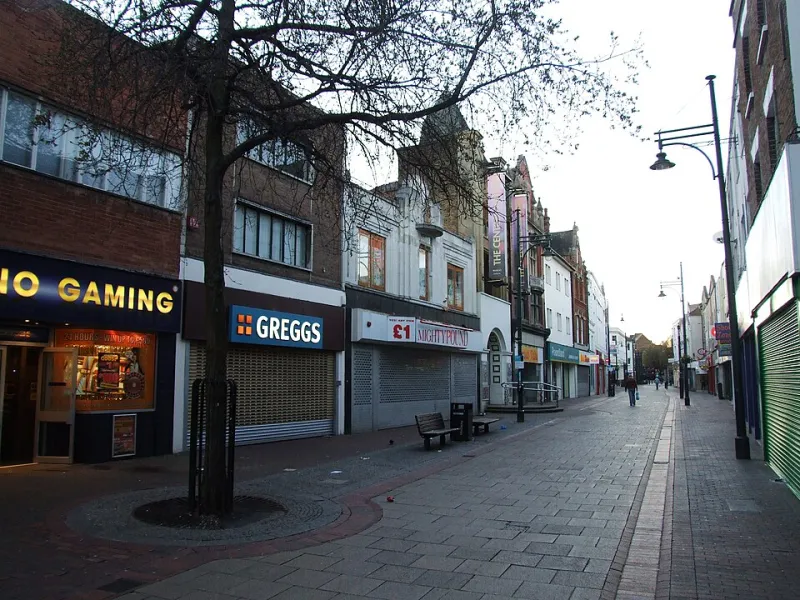
Photo: Chris Whippet , CC BY-SA 2.0, via Wikimedia Commons
There is a certain type of portrait that begins with a long drive to a stately home, a permit and a careful arrangement in front of a fountain. It can be beautiful. It can also look like every other portrait taken in front of that fountain. My favourite backdrops are usually within walking distance of a bus stop.
That is not a rejection of grand locations. It is a reminder that a portrait is stronger when the place means something. A market square where you bought your first flat white, a café window that catches the light at 4pm, a rain-slicked pavement outside the chippy — these are not compromises. They are stories with a postcode.
Why Ordinary Places Work
Everyday UK places come with texture, colour and context. A high street has layers: shop signs, brick, painted doors, reflections, people moving through the frame. It gives the eye something to explore and gives the subject somewhere to belong. Grand locations often ask you to perform. Ordinary places let you stand still.
They are also practical. You do not need a long drive, a booking or a good weather guarantee. You can scout them on a lunch break. You can return when the light is better. And if it rains, you are already near shelter.
Scout the Light, Not Just the Look
A backdrop is only as good as the light hitting it. Walk the same street at three different times. In the morning, east-facing shopfronts may be bright and west-facing ones shaded. In the afternoon, the pattern reverses. Overcast days flatten the contrast but make colours richer. Blue hour turns café windows into glowing rectangles and wet pavements into mirrors.
Look for window light first. A café with a big pane and a pale interior can act as a softbox. A bus shelter can block wind and rain while giving you a frame. A market hall may have shafts of light between stalls. A library steps or a civic building can give you clean lines and shade. The best spots are often the ones you pass every day without seeing.
The High Street Audit
When I scout a high street, I look for five things: shelter, texture, colour, reflection and a bit of quiet. Shelter means a doorway, canopy or bus stop you can use if the weather turns. Texture means brick, stone, painted wood or peeling paint that gives the frame character. Colour means a door, awning or sign that lifts the picture without shouting. Reflection means a window, puddle or wet pavement that adds depth. Quiet means a time of day when you are not fighting crowds.
A useful route might start at the market square, move to a café window, cross to a bus stop, then finish in a side alley with a good wall. Keep it short. Three or four strong spots are better than ten mediocre ones.
Ask, Don't Assume
Public pavements are generally fine for a quick portrait, but shopfronts and cafés are someone's business. Ask before you use a doorway as a studio. Buy a coffee if you are using a café table. Keep doorways clear. If you want to photograph inside a market, library or station, check the rules. For commercial shoots, councils often have filming or photography guidance, so look it up before you turn up with a tripod and a reflector.
Permission is not just admin. It is part of the story. A shopkeeper who says yes may also give you a better spot, a stool or a warning about the lunchtime rush.
Work Unobtrusively
Small kit wins on the high street. One camera, one lens and maybe a small bounce is enough. A giant reflector and a crew of three changes the energy of a place. Work quickly, keep bags close and avoid blocking pavements. If someone does not want to be in the frame, respect that. If a crowd gathers, move on. The aim is to be a quiet observer, not a spectacle.
Choose quieter times: early morning, Sunday afternoon, the lull after lunch. Avoid school pick-up and Saturday market peak unless the bustle is part of the story. Learn to shoot through gaps, use reflections and let the background blur just enough to keep the focus on the person.
Rain Is a Gift
UK rain is not a reason to cancel. Wet pavements reflect signs and sky. Clear umbrellas keep faces bright. Bus shelters give you a ready-made frame and a bit of narrative. A rainy high street can feel cinematic in a way that a dry one rarely does. Bring a microfibre cloth, keep the camera under a jacket and embrace the puddle.
Make It Mean Something
The best portrait backdrop is not the most impressive one. It is the one that says something about the person in front of it. A high street can do that if you choose it with care. Scout the light, ask nicely, work lightly and let the ordinary do the heavy lifting. The result is a portrait that could only have been made here — and that is the point.