After the Tinsel: Why January's Quiet Rooms Take the Truest Portraits
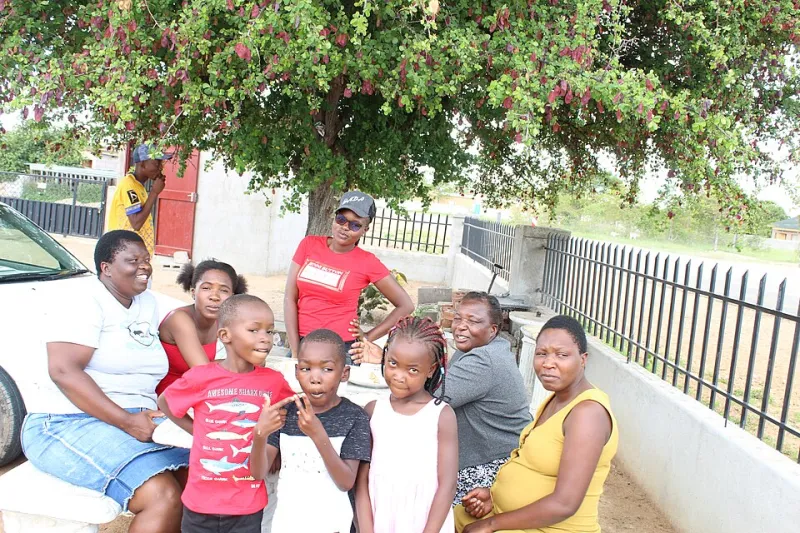
Photo: Abza1, CC BY-SA 4.0, via Wikimedia Commons
January is an odd month to point a camera at a person. The decorations are back in the loft, the good jumper has been relegated to a drawer, and nobody has had a haircut since the second week of December. It is also, quietly, the best month of the year for a portrait session — a fact I have stopped being surprised by and started planning around.
The month nobody books
Ask anyone who shoots portraits in the UK what their quietest four weeks are and you'll get the same answer. December is a scrum. February picks up. January sits there like a cold cup of tea, and families assume we're either fully booked or away somewhere warm.
The result is a calendar with holes in it. Holes are useful. In January I can offer a Tuesday morning, spend an hour and a half on something that would be a forty-minute squeeze in June, and turn the images around while the outside world is still doing exactly what it was doing on the day we shot.
What flat light actually does
Photographers are fond of complaining about grey skies. Grey skies are the most forgiving light source in Britain, and Britain has them in abundance at the start of the year.
A low, even sky — the kind that hasn't decided whether to rain — behaves like an enormous softbox. No hard shadow under the eye, no bright stripe across the forehead from a window, no squinting. Skin looks like skin. Freckles survive. Wrinkles read as character rather than contrast. If you've ever wondered why a photo taken in a car on a dull day looked better than the one on the beach in August, this is why.
There's a catch, of course: flat light flattens. You get softness at the cost of shape. That's why a January session leans so hard on windows and direction rather than on brightness.
A north-facing living room is a studio
Practical notes, because this is where people get stuck.
Turn the ceiling light off. All of them, including the one in the hall that's bleeding round the door. You want one source.
Put the chair about a metre and a half from the biggest window, side-on rather than facing it. Facing the window gives you a flat, front-lit passport photo. Side light gives you a shadow down one cheek and a shape to the nose.
If the room is dark, hang a white sheet or a pale throw on the wall opposite the window. That's your bounce. It costs nothing and does more than most gadgets.
Mid-morning through to about two in the afternoon is your window — literally. After two in January the light drops off a cliff. Don't fight it: book earlier, finish earlier, put the kettle on.
The performance problem disappears
The reason January portraits feel different isn't technical, it's social. Nobody is dressed for an occasion. Nobody is being photographed at something. There's no birthday, no anniversary, no 'we really should get one of us for the wall.'
What that means is people arrive as themselves. The five-year-old is wearing the leggings she's had on for three days. Dad hasn't shaved. The dog is in the room because nobody thought to shut the door. These are not the details you'd write on a shot list, and they're precisely why the pictures work.
The party season asks people to perform. January asks them to sit down.
Booking without the pressure
The other reason the first weeks of the year suit a session is that they arrive with no expectations attached. A few things worth offering:
A short session. Forty-five minutes in the house, no location change, no outfit change. It fits around a nap or a work call and it doesn't eat a whole day.
A weekday morning. Quieter, and the light is better than at the weekend because you're not competing with a full house and a car on the drive.
A reason that isn't a reason. Christmas vouchers get redeemed in January, but so do the bookings people make because they realised, somewhere between the second helping and the leftovers, that there are no decent photographs of the four of them together.
Bring nothing
What to wear, briefly: layers, muted tones, nothing with a slogan across the chest. Anything you'd wear to the garden centre on a Saturday is probably right; anything you'd wear to a wedding is probably wrong.
The one thing worth bringing is a mug you actually use. Not a nice one. The chipped one. It gives your hands something to do, which is the single biggest problem in portrait photography and the reason so many pictures look like the subject is waiting for a bus.
The honest frame
There's a version of portrait photography that treats the sitter as a blank surface for good light. I'm not interested in that. The sessions that stay with me are the ones where somebody forgets, for about four minutes, that a camera is in the room and starts telling a story about a boiler or a difficult neighbour.
January gives you those four minutes more easily than any other month. The calendar is empty, the light is soft, the party clothes are away and there is nothing to perform for. All you have to do is turn the ceiling light off and sit near the window.