Between the Vows and the Vol-au-Vents: Why the Smallest Windows Make the Best Wedding Portraits
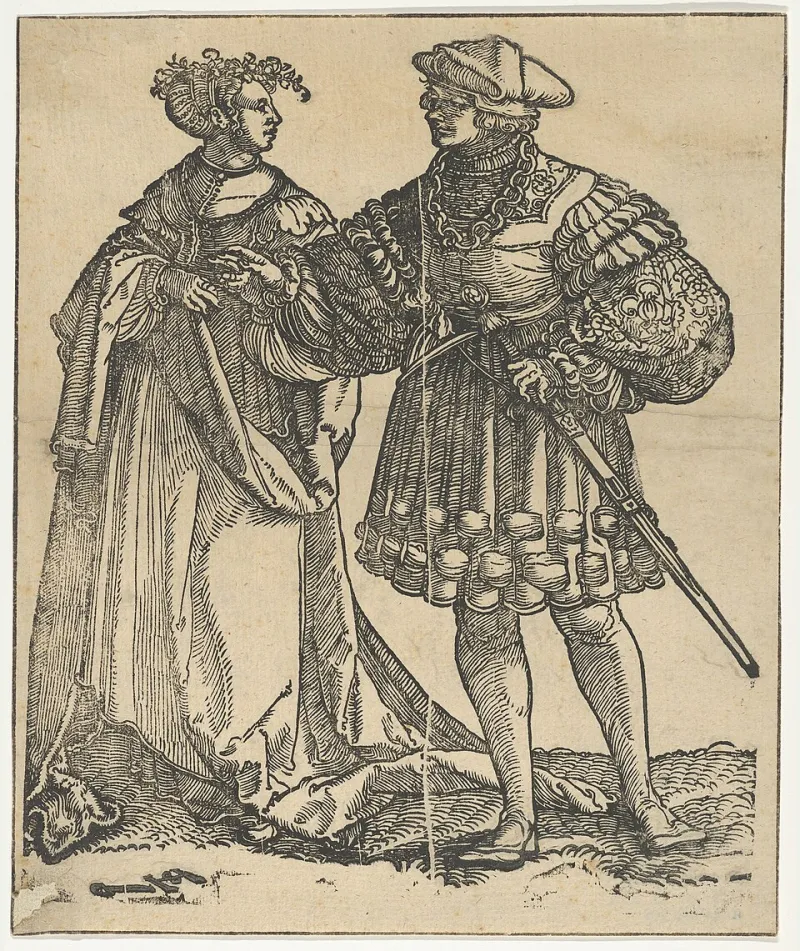
Photo: Hans Leonhard Schäufelein, CC0, via Wikimedia Commons
There is a moment at almost every wedding that nobody photographs, and it is very often the best one of the day.
It arrives roughly four minutes after the last of the confetti has been brushed off a shoulder and about eight minutes before somebody with a clipboard asks everyone to take their seats. The bride is holding a glass of something she has not yet had a chance to drink. A bridesmaid is hitching up a strap. Somebody's uncle is halfway through a story in the corner and three people are pretending to listen. Nobody is looking at a camera. Everybody looks like themselves.
That is the window. Not the half-hour after the group shots. The four minutes in the middle of everything, when the day is doing its own thing and nobody has been asked to perform.
The Half-Hour Slot Is the Least Honest Part of the Day
Every UK wedding timeline has one: thirty minutes, pencilled in, usually straight after the group photographs and before the wedding breakfast. It is a sensible piece of scheduling and it produces perfectly serviceable images. It also, more often than not, produces pictures of two people waiting to be told what to do next.
That is not a criticism of couples or photographers. It is a timing problem. A portrait only really works when there is nothing else pressing, and on a wedding day everything is pressing. The meal is holding. The venue is watching the clock. The photographer is watching the light. Nobody is fully in the room, and it shows in the shoulders.
Where the Real Frames Are Hiding
Once you start looking for micro-moments, you find them everywhere. A short, non-exhaustive list from a few hundred weddings:
- The ninety seconds after confetti, when everyone is laughing at the person who threw it too hard.
- The walk from the ceremony to the drinks reception — the only time all day the couple are genuinely alone in public.
- Buttonholes and straps and hems, being fiddled with by somebody's mum.
- The two minutes before the meal is announced, when hunger makes everyone honest.
- The gap between speeches, especially right after the father of the bride has sat down and the bride is deciding whether she is allowed to cry.
- The moment the band checks their levels and the room dims and half the guests drift towards the bar.
- The nip outside for air at 9pm, when the marquee has got too warm and the light has gone blue.
None of these are scheduled. All of them are photographable if someone is paying attention.
What Five Minutes Actually Looks Like
A real example. Late October, a barn venue in the Cotswolds, 14:52. Confetti done, canapés circulating, the couple had been pulled in six directions. The coordinator announced that the meal would be called in fifteen minutes.
I asked for one thing: walk to the end of the wall and back, slowly, and don't look at me. It took four minutes. In that time we got her laughing at something he said about the seating plan, him adjusting her hair where the wind had got at it, and one frame of the two of them standing still with their hands loosely together, looking at the marquee rather than the lens. That last one is on their wall.
The formal portraits from that day are fine. That frame is the one people comment on.
A Micro-Moment Shot List That Works in Real Life
If you are a couple planning a wedding, or a photographer trying to build this into your approach, this is the practical version:
- The post-confetti walk. Ten paces away from the crowd, no direction beyond "keep walking".
- The adjustment. Whoever is fixing hair, dress, tie or buttonhole — shoot the hands, then the faces.
- The held drink. A portrait of someone doing absolutely nothing with a glass in their hand is rarely wasted.
- The doorway pause. Every venue has one. Use it as the couple arrive at the reception.
- The speech aftermath. Two frames, no flash, from the side of the room.
- The outdoor escape. Watch for the couple slipping out for air — that is your licence to follow at a distance.
- The last light check. If golden hour lands mid-evening, steal ninety seconds. No more.
- The quiet corner. Find where the day's noise drops away and put them there for three minutes.
Eight shots, none of which need a schedule, all of which need a photographer who is watching rather than setting up.
Prompts That Don't Sound Like Prompts
Most couples freeze at "look at each other". Most couples relax instantly at a job.
Try: Walk to that tree and don't look back. Or: Tell him the thing you'd never say in front of your mum. Or: Whisper what you're having for breakfast tomorrow. Or simply: Stand there and be bored for thirty seconds. That last one is genuinely useful — boredom reads as calm on camera, and calm reads as intimacy.
The trick is that none of these require the couple to think about being photographed. They require them to think about something else for a moment, which is all a good portrait ever really is.
Protecting the Minutes Without Wrecking the Schedule
Here is the part that matters for planning. You are not adding time to the day; you are using time that already exists.
- Tell your photographer, in advance, that you want this approach. It changes how they work and where they stand.
- Ask your coordinator to leave a genuine ten-minute buffer between the end of the drinks reception and the call to sit down. That gap is where the best frames live.
- If you have a shot you really want, name it. "I'd love one of us walking back from the confetti" is a much easier brief than "some natural ones, please".
- Don't fill every minute. A wedding day with no slack in it produces photographs with no slack in them either.
The Rule Itself
Five minutes. One location. No lens changes. No group rearranging. If it starts to take longer than five, stop and let the day carry on, because a portrait that costs the couple their drinks reception is a portrait they will remember grumpily.
The best wedding photographs are not the ones where everybody tried hardest. They are the ones taken in the gaps, by someone who noticed the gap, in the four minutes before somebody said it was time to sit down. Give those minutes room and the album takes care of itself.