One Roll, No Safety Net: A Slower Way to Photograph Couples
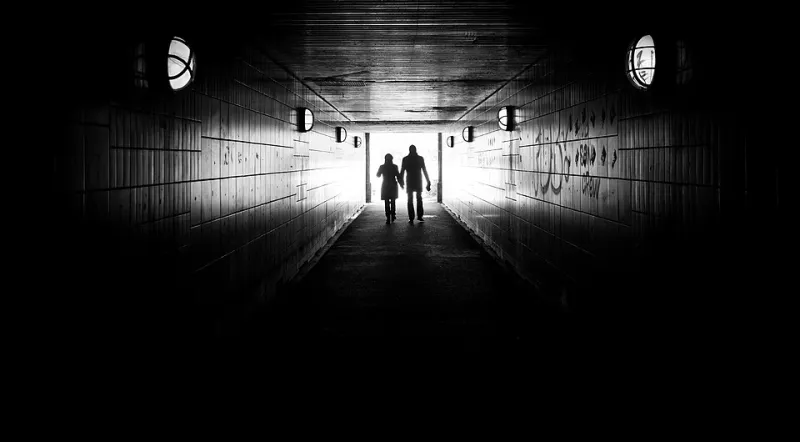
Photo: Thomas Leuthard from Zug, Switzerland, CC BY 2.0, via Wikimedia Commons
There is a particular sound a digital camera makes when someone is nervous: click, click, click, click. It is the sound of reassurance seeking. One more frame, just in case. Another angle, another expression, another chance to get it right. By the end of a conventional couples shoot, you can end up with hundreds of photographs and the nagging feeling that the real story is still hiding somewhere between them.
A one-roll session works differently. Thirty-six exposures. That is the whole budget. No safety net, no reviewing every frame on the back of the camera, no quiet panic that there will be enough. Just a couple, a photographer, a stretch of time and a finite strip of film. It sounds like pressure. Most couples find it strangely relaxing.
The rule is the release
When people say they are awkward in front of the camera, what they usually mean is that they do not know what to do with their hands, their faces or the silence. Digital photography can make that worse. The camera stays up, the shutter keeps firing and the person behind it keeps saying encouraging things in a tone that suggests the next frame will finally be the one. It is a lot of expectation to carry.
A single roll removes the endless options. I explain the limit at the start: thirty-six frames, roughly ninety minutes, two locations at most. We are not trying to document every second. We are looking for a handful of honest moments and a contact sheet that reads like a short story. Couples tend to exhale at that point. The session stops feeling like a performance and starts feeling like a walk with a purpose.
There is also no screen to check. That matters more than it sounds. When nobody is reviewing the last shot, nobody is judging the last shot. You cannot decide you looked odd in frame twelve and spend the next twenty minutes trying to correct it. You simply carry on. The camera becomes a quiet companion rather than a mirror with a shutter button.
What thirty-six frames actually feels like
A roll has a rhythm. The first few frames are warm-up: standing near each other, getting used to the lens, letting the location settle around you. The middle stretch is where the good stuff usually happens. By then the counting has stopped being self-conscious and the prompts have become a kind of conversation. The final ten frames have an odd kind of freedom. The budget is nearly spent, so there is no point saving anything for later.
I usually shoot on 35mm film for these sessions, though the same structure works with a digital camera set to a thirty-six-frame limit. The point is not nostalgia. The point is a constraint that everyone can understand. You do not need to know about aperture or film stock to understand that we have thirty-six goes and then we are done.
Prompts that give you something to do
A one-roll session lives or dies on prompts that are specific enough to be useful but loose enough to leave room for real behaviour. Generic instructions like “act natural” are a trap. Better to give a couple a small task and let the photograph happen around it.
- Walk towards me from the other side of the street, talking about what you are having for dinner.
- Stand back-to-back and try to describe the view without turning around.
- Hold hands and walk away, then one of you stops without warning.
- Whisper the worst outfit the other person has ever worn.
- Sit on a wall and decide, out loud, where you would go tomorrow if you had no plans.
- Count to three together, then look at each other instead of the camera.
The best frames are often the ones just after the prompt, when the posed idea collapses and the real reaction arrives. With thirty-six frames, I am looking for those edges rather than trying to manufacture a perfect smile.
Places that suit a short roll
A single roll does not need a grand location. In fact, too much scenery can overwhelm a short session. I would rather have one ordinary street, a park bench, a bus stop, a patch of coast or a favourite corner of a flat than a whirlwind tour of five photogenic spots.
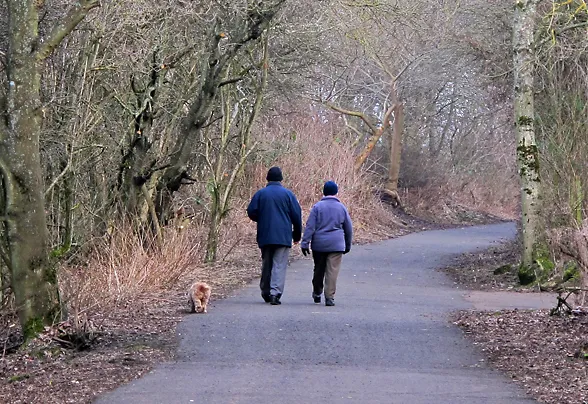
In the UK, off-season coastal towns are hard to beat. Brighton in February, Whitby on a grey Tuesday, a promenade in Kent with the wind coming off the sea. The light is soft, the crowds are thinner and nobody looks out of place in a coat. City sessions work well too: a market, a canal path, the edge of a park at golden hour, the walk between the station and the pub. If a couple has a place that means something to them, that is better still. A kitchen, a favourite bookshop, a football ground, a National Trust garden they visit every year.
Two locations is plenty. One is often enough. The constraint applies to geography as well as frames.
Why fewer photographs can tell more
There is a version of modern portrait photography that treats quantity as insurance. Take enough frames and surely one will be good. But a set of portraits is not a lucky dip. It is an edit. The one-roll approach forces the edit to happen in the moment, through attention rather than after-the-fact culling.
The contact sheet is part of the appeal. Thirty-six small frames in sequence, with the blinks, the half-laughs, the in-between gestures and the occasional miss. Couples often respond to the imperfect frames more than the polished ones because they recognise themselves in them. The story is not only in the frame where everyone looks lovely. It is in the run of frames around it: the hand reaching for a sleeve, the wind ruining someone’s hair, the moment one of them gives up on posing and starts laughing.
In 2026, when every phone is a camera and every camera is a machine for taking too many pictures, a limit feels almost radical. But it is also a relief. Thirty-six frames is enough for a walk, a few prompts, a change of light and one good excuse to stop trying so hard. The result is not a smaller story. It is a clearer one.
If you are considering a one-roll couples session, the only real requirement is a willingness to be a bit unpolished. Bring a coat, choose a place you actually like and leave the rest to the count.