When the Streets Soften: Five UK Portrait Spots for Late Summer Evenings
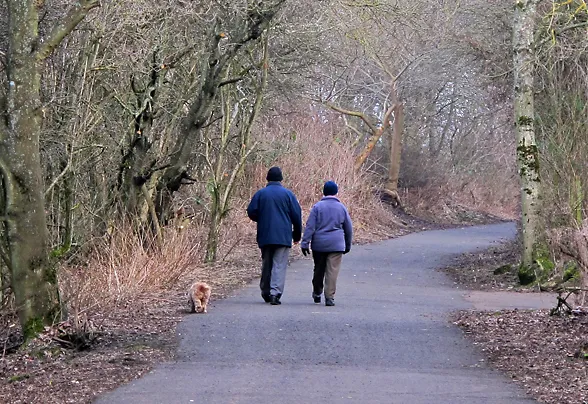
Photo: William Starkey , CC BY-SA 2.0, via Wikimedia Commons
There is a particular hour in a British summer that does not get enough credit. It arrives after the tea things have been cleared, after the office has emptied, after the beach towels have been shaken out. The light goes long and low, the streets lose their hard edges, and places that felt ordinary at noon suddenly have something to say. I plan a lot of portrait sessions around that hour. Not because late evening is automatically better, but because it changes how people behave in a place. The rush is over. The backdrop settles. You get a little more room to breathe.
This is not a guide to chasing sunset. Sunset is a deadline, not a destination. The better approach is to pick a place that works in the hour or two before it, arrive with time to spare, and let the session stay out long enough to catch the good light rather than sprinting through it. Here are five very different UK settings that come into their own after 8pm in late spring and summer, plus the practical bits that make a relaxed evening session possible.
1. The coastal path that empties after tea
A coastal path is one of the most generous backdrops you can ask for, but only once the day-trippers have gone. After 8pm in June or July, the light rakes across the water, the path casts long shadows, and the sea haze does half the work for you. Families head home for dinner, the car park thins out, and the walkers who remain are usually happy to step around a portrait session.
What makes it work: that low, sideways light, the space to move, and the way a coastal path gives you options within a few minutes of walking. You can shoot against the sea, use the path as a leading line, or turn inland for gorse, grass and fence posts.
Practical notes: check tide times before you go, because a path that looks wide at 7pm can be a different proposition at 8.30. Take a wind layer, even in a heatwave. Some council car parks charge until 8pm or later, so read the signs. Access land and footpaths are generally fine for small portrait sessions, but do not block gates or scrambles. If you want to use a drone, check local restrictions and keep well away from other people.
Crowd control is simple here: walk ten minutes away from the main beach or honeypot village. The last-light tour does not need a famous view. It needs a path, a horizon and a bit of patience.
2. The city square with a civic backdrop
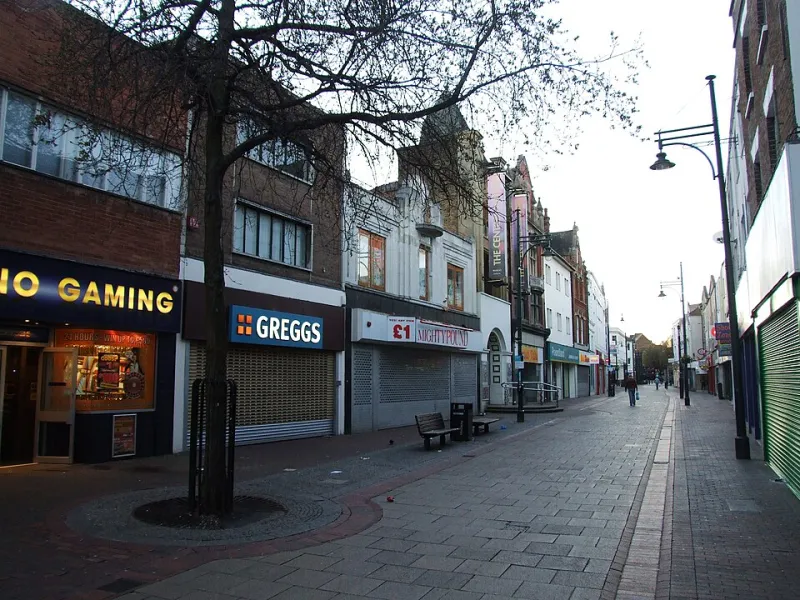
City squares are underrated for portraits because they are full of texture: stone, glass, benches, steps, columns and reflections. After 8pm, the office workers have gone, the lunchtime crowd is a memory, and the light bounces between buildings in a way that feels almost theatrical. In Birmingham, Leeds, Manchester or Bristol, a good square can give you a dozen different looks without moving more than fifty metres.
What makes it work: architecture gives you shade, bounce and framing. Late evening light skims the tops of buildings and leaves the street level soft and even. The square also gives people something to do with their hands and feet - lean on a wall, sit on a step, walk through a colonnade.
Practical notes: public squares are not always a free-for-all for professional photography. Some councils require a permit for commercial shoots, and some private estates have their own rules. A small, unobtrusive portrait session is usually tolerated, but it is worth checking the council website or ringing the venue if you are unsure. Avoid tripods in busy pedestrian areas, and never set up in front of a tram stop or fire exit.
Crowds: choose the edges of the square rather than the middle, and use the last of the commuters as part of the frame rather than fighting them. If an event is on, walk one street over. There is always another square.
3. The woodland edge, not the deep wood
The deep wood goes dark long before the sky does. The woodland edge is where the late light lives. After 8pm, the canopy softens, the ferns catch a little glow, and the path becomes a ribbon of warm light against a cooler background. It is also cooler than a city street, which is a gift in a July heatwave.
What makes it work: contrast. You get bright background, soft foreground and the kind of dappled texture that makes a portrait feel like it was made rather than taken. The edge of a field, a ride or a wide track gives you space to stand back with a longer lens and let the place do the talking.
Practical notes: midges are real. Take repellent, cover ankles and warn your clients. Check access - Forestry England, the Woodland Trust and the National Trust all have their own photography policies, and commercial work may need permission. Stay on paths where ground-nesting birds might be around. If the wood is private, ask.
Crowds are rarely a problem at the edge of a wood after 8pm, but dog walkers and cyclists still use shared paths. Keep the session to one side, listen for bells, and do not set up in a blind corner.
4. The canal side at locking-up time
A canal towpath gives you reflections, brick, narrowboats and a very British kind of calm. After 8pm, the day boats are back, the locks have settled, and the water goes still enough to double the sky. It is a lovely place for couples who feel awkward in open spaces, because there is always something to walk beside, lean against or look at.
What makes it work: water reflects the last light and fills the background with colour. The towpath gives you a natural line, and the boats, bridges and lock gates add layers without feeling like a theme park.
Practical notes: the Canal & River Trust manages most towpaths, and while public access is usually fine, commercial photography can require permission. Check before you turn up with a reflector and a client. Safety matters more than the shot: keep children and excited dogs away from the edge, and do not stand in the middle of the path when a cyclist is coming.
Crowds: avoid the busiest lock flight at pub-turnout time. Walk fifteen minutes in either direction and the towpath usually empties. The best light often comes through a bridge hole or across a winding hole, so scout ahead.
5. The suburban park that closes at dusk
The local park is the most honest location on this list. It is where people walk their dogs, play five-a-side and eat ice cream on a bench. After 8pm, the playground empties, the footballers go home, and the park becomes a set of paths, trees and open grass with a very low-key kind of beauty.
What makes it work: familiarity. Clients relax in a park they know. You get open sky, mature trees, benches, a pond if you are lucky, and the kind of soft, unobstructed light that makes faces look like themselves.
Practical notes: check the closing time. Many UK parks close at dusk or have gates that are locked at a set hour, and dusk in June is much later than dusk in September. Council websites usually list opening times. Small portrait sessions rarely need a permit, but some parks do require one for professional photography, so a quick email saves a lot of hassle. Avoid the playground and the football pitch, and pick up after yourselves.
Crowds: the park is big enough to share. Use the edges, the tree line and the quieter paths. If a game is still going, shoot into the light rather than across it and let the players blur into the background.
How to plan a session that stays out late enough
The common mistake is to book a session at 8pm and treat 8pm as the start. In late June, the good light might not arrive until 8.45 or 9. The session needs to be planned around the light, not the clock.
First, check sunset for your date. Aim to start 60 to 90 minutes before it, then keep shooting for 20 to 30 minutes after. That gives you a buffer for parking, walking and the ten minutes it takes everyone to stop apologising for being nervous.
Second, pick one location, not five. The last-light tour is a mindset, not a road trip. Two spots within walking distance is plenty. Driving between locations eats the very light you came for.
Third, build in a settle. Fifteen minutes of walking, chatting and looking at the place does more for a portrait than any pose. Let people arrive before you ask them to be photographed.
Fourth, do the permission homework. Check council rules, park closing times, National Trust or Forestry England policies, and whether your chosen square has an event on. Carry public liability insurance if you are working professionally. It is not glamorous, but it is the difference between a relaxed session and a tap on the shoulder.
Fifth, pack for the evening. Layers, insect repellent, a flask, flat shoes, a cloth for wet benches, and a small reflector if you use one. A session that stays out late should feel like a walk with a camera, not a production.
Finally, leave the last ten minutes unplanned. The best frame often comes when everyone thinks you have finished. The light is low, the crowd has gone, and the place has softened. That is the hour worth waiting for.