Pull Up a Stool: The Wedding Chat That Beats Any Shot List
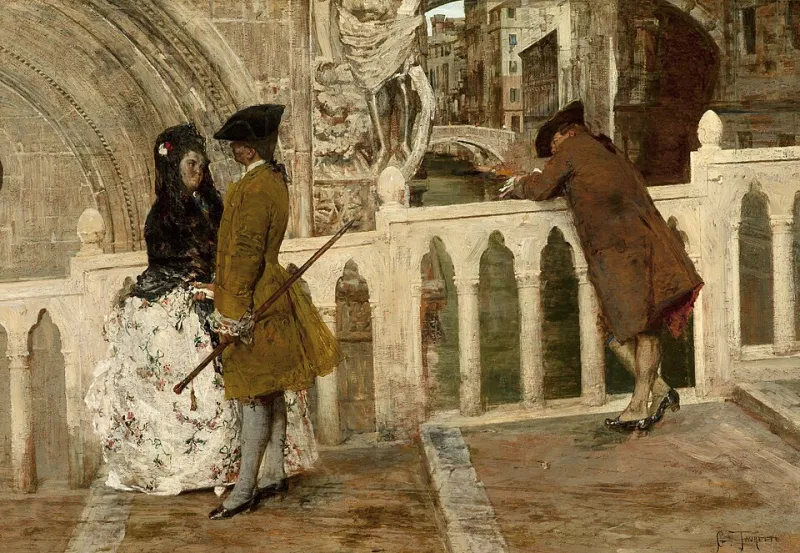
Photo: Giacomo Favretto, Public domain, via Wikimedia Commons
I have sat through a lot of wedding planning meetings. Folder out, laptop open, a Pinterest board titled 'vibe' with forty-seven pins of the same barn. All of it is useful, eventually. None of it tells me whether the couple will relax in front of a camera at four in the afternoon on the biggest, strangest day of their lives.
Only one thing reliably does that, and it costs about eleven pounds and comes in a glass.
The plan is not the problem — the order is
Shot lists, timelines and wet-weather contingencies are good. I like them. But they are second-date material, not first-date material. If the first conversation a couple has with their photographer is about logistics, logistics is what the relationship is built on. Then, on the day, everyone is very organised and slightly stiff, and the photographs show it.
A pub meeting flips that. You spend an hour talking about nothing much, and somewhere in the middle of it you both work out whether you actually like each other. That answer matters more to the pictures than any lighting diagram.
What a pub does that a video call cannot
It removes the interview. A video call has a formality baked in — the grid, the mute button, the sitting-up-straight. A pub has noise, a dog under the next table, someone's birthday getting loud in the corner, and a slight fight over who is buying the crisps. It is impossible to be impressive in that environment, which is exactly the point. You get the version of a person that will turn up on the wedding day: unpolished, funny, a bit tired, real.
It also lets a photographer be seen. You can watch how someone holds themselves, how they talk to staff, whether they are kind when the card machine fails. Couples should be doing the same. Comfort is not a mood board decision; it is a chemistry test, and you can only run it in person.
Things actually worth talking about
The venue, briefly. Then: who is coming and who is nervous about it. Which parts of the day you are dreading — everyone dreads something, usually the group shots or the first dance or the bit where a relative makes a speech. Where you got engaged. Whether you have ever had a photograph taken that you liked, and what it was.
And the one I ask every time: what do you want to be doing at nine in the evening? Not what you want photographed. What you want to be doing. That answer tells me more about the shape of a wedding than a shot list ever has.
What the photographer should not be doing: selling. If a first meeting includes a rate card and a discount for booking within seven days, you have learned nothing about each other.
The unglamorous subjects
Some of the most useful things said over a pint never appear in a plan. That the bride's father is unwell and might not make it to the speeches. That the couple have a running joke involving a service station on the M6 and would like it honoured somehow. That one of them hates their left side. That the dog is coming to the ceremony and nobody knows how that will go.
None of this fits neatly on a timeline. All of it changes how I photograph the day — where I stand, when I step back, which moments I make room for and which I let stay private.
Then put it away and leave
Order another drink or do not. Do not turn the afternoon into a two-hour session. Ninety minutes, tops, and no homework afterwards.
The next time you see each other should ideally be at the pre-wedding shoot or on the morning itself, and it should feel like seeing someone you have already had a slightly rubbish Tuesday with. That familiarity is worth more than any wedding-breakfast schedule, and it costs the price of two rounds and one bag of salt and vinegar.