Mind the Gap, Catch the Light: Station Wedding Portraits Across the UK
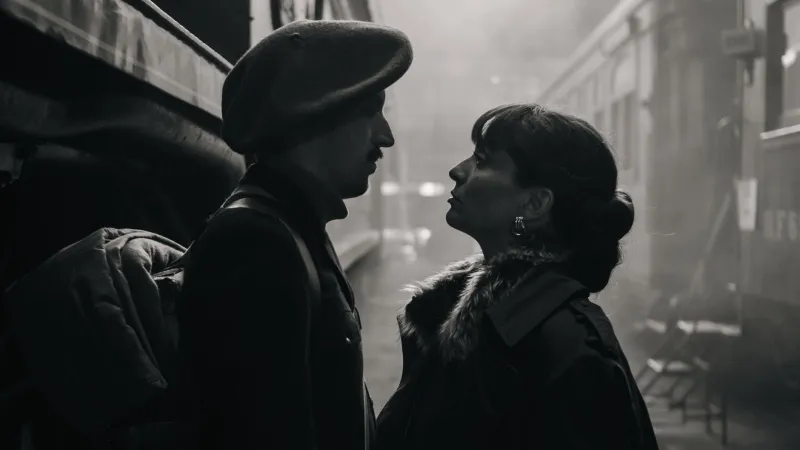
There is a particular kind of light on a British station platform. It bounces off the canopy, catches the edge of a departure board and lands somewhere between grey and gold. People are arriving, leaving, saying goodbye, saying hello, checking their watches. Nobody is posing. That is exactly why it works.
A station is not a manicured park with a tidy flowerbed and a bench placed for photographs. It is a working place, full of small dramas. For a couple on their wedding day, that nervous, hopeful, slightly unsettled energy can be far more honest than a formal garden. The trick is to work with the station rather than against it.
Why a station can beat the obvious backdrop
Most wedding portrait locations are chosen because they are pretty. Stations are chosen because they mean something. Perhaps you met on a commute, got engaged on a platform, or simply like the idea of starting married life in a place built for journeys. That personal logic matters more than whether the benches match the bouquet.
Stations also give you layers. There is the grand architecture of a city concourse, the worn paint of a rural halt, the rhythm of announcements, the blur of a passing train. You do not need to manufacture atmosphere. You just need to stand in the right spot and wait for the frame to fill itself.
Pick the station for the story, not the postcode
A rural request stop and a major London terminus are different beasts. A quiet halt in the Dales or a small station in the Borders might give you empty platforms, soft light and a cup of tea in the waiting room. A grand concourse — think St Pancras, York, Edinburgh Waverley or Glasgow Central — gives you scale, glass, ironwork and a sense of occasion. Both can work; neither is automatically better.
Be realistic about what you need. If you want quiet, choose a station with low footfall and check the timetable. If you want architecture, accept that you will be sharing it with commuters, luggage and the occasional hen party. Match the location to the mood of the couple, not to a mood board.
Have the permission conversation early
This is the least romantic part and the most important. Do not turn up with a camera bag and a formal outfit assuming the station will be delighted. Stations are regulated spaces. Contact the station manager or the train operator in advance, explain what you are doing, and ask what is allowed. Some larger stations have commercial photography policies, permits or fees. Some rural stations are more relaxed, but relaxed is not the same as automatic.
Be specific. Tell them the date, the rough time, the number of people and whether you need access beyond the ticket barriers. Ask where you can and cannot stand. Ask about tripods, lighting and flash. Then follow the answer. If permission is unclear, do not push it. A station threshold, an exterior forecourt or a nearby street can still give you the feeling without the risk.
Read the departure board like a shot list
Timing is everything. Peak commuter hours are not the moment for a romantic platform wander. Aim for quieter windows — mid-morning or early afternoon at weekends, or a lull between services on a weekday. Check the timetable in advance and build a short buffer around your visit. Trains are not background extras; they are the main event, and they will interrupt you.
Use the board rather than fight it. A train arriving can give you movement, steam, blurred figures and a natural burst of energy. A train leaving can give you a sudden hush. Watch the announcements, keep your couple close to the quieter end of the platform, and never block the platform edge or the doors. Safety first, photograph second.
Work the light you are given
Station light is often better than people expect. High windows and glass roofs diffuse the sun. Canopies create soft shade. Underpasses and waiting rooms give you pockets of contrast. Mixed lighting — tungsten, fluorescent, daylight — can be tricky, but it can also be characterful. Keep your kit simple: one small reflector, a fast lens and the willingness to move.
Avoid flash unless you have checked it is allowed and you actually need it. On a busy platform, a burst of flash is a nuisance and a distraction. Look for pools of light where a face catches the glow from a board or a window. Look for shadows that give shape. If the station is dim, embrace it. Grain and softness suit the mood.
Let the crowd be part of the picture
You are not going to clear a station for a wedding portrait, and you should not try. Commuters are part of the texture. Use a longer lens to compress the scene and let people blur past. Frame the couple against a wall of movement. Wait for a gap, not for an empty station. If someone walks through the shot, that is often the shot.
The exception is when the couple feels exposed. Keep them close to a wall, a bench or a quiet corner. Give them small things to do: check the board, share a coffee, wait by a pillar, walk towards the exit. The best station portraits are not posed. They are borrowed moments from a place that is already in motion.
A short route for nervous couples
Start outside. Walk in together. Pause by the departure board. Find a bench away from the main flow. Ask them to watch for a train rather than look at you. Then move to the platform, if permitted, and keep it brief. Ten focused minutes is worth more than an hour of hanging around. Finish with a wide frame that shows the station itself — the roof, the clock, the signs — so the story has somewhere to live.
Etiquette, kit and knowing when to leave
Travel light. A small bag, spare batteries, comfortable shoes and a compact umbrella will serve you better than a trolley of gear. Do not block stairs, ticket gates or doorways. Step aside for staff and passengers. Be polite to anyone who asks what you are doing. If the station gets busy, if permission feels shaky, or if the couple is uncomfortable, stop. No photograph is worth a ruined journey.
A railway station is a place of transitions, and a wedding day is one of the biggest transitions of all. That is why the pictures feel strange and beautiful in equal measure. You are not photographing a backdrop. You are photographing the moment before the next thing happens. Mind the gap, catch the light, and let the train go without you.